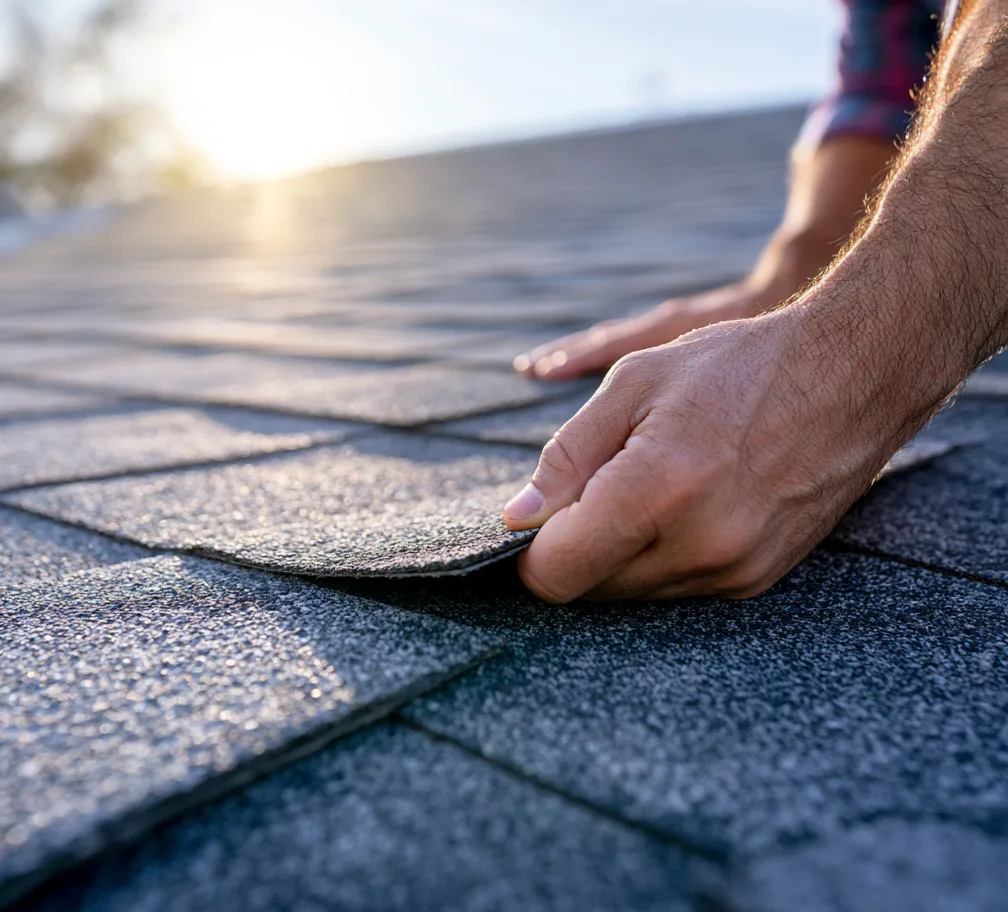
The roof covering
Shingles, panels or membrane are assessed for visible damage and deterioration. The extent and distribution help distinguish a local defect from a wider condition.
A view from the yard can show an obvious missing shingle, but it doesn’t reveal every loose edge or flashing connection. Getting onto the roof brings those details close enough to assess the condition behind the question.
The inspection considers accessible surfaces and the places where the covering meets vents, walls and drainage details. What you have noticed indoors can help connect the roof above with the concern below. You don’t need to find that connection yourself.
Ten Mile’s inspection offer is free. It is a starting point for understanding the roof and any proposed work, with access limitations or concealed conditions explained where they affect the answer.
Shingles, panels or membrane are assessed for visible damage and deterioration. The extent and distribution help distinguish a local defect from a wider condition.
Vents, pipes, walls and chimneys interrupt the covering. Their flashing must redirect water onto the next drainage surface.
Eaves, gutters and roof drains can explain how water leaves the surface. Blocked outlets and poorly connected edges need attention alongside the open roof.
Sagging, movement or moisture signs can indicate a condition that needs further investigation. The first visit cannot expose every concealed deck or insulation layer.
Bring the roofing question you already have.
A change after wind, hail or an impact.
A stain or drip that needs its source found.
A closer look before settling the scope.
Loose shingles or a visible impact after wind or hail gives an inspection a reason to look closely. A nearby weather report provides timing context, not proof of damage on the property.
A stain or drip is worth discussing even when nothing looks different from outside. Tell us which room is affected and anything you already know about when it appeared.
If you’re considering replacement, the roof’s actual condition and shape should inform the scope. The inspection can help establish those starting questions before a final covering is selected.
Option 1
The roof inspection considers the physical roof and the work it may need. It doesn’t require you to arrive with measurements, a material choice or a diagnosis.
Option 2
An insurance decision comes from the insurer under the policy. A municipal or historic approval follows the applicable public process. Neither is established by requesting a free roof inspection.
A short description is enough to request help. Include a detached roof or business building if that is the property you want assessed.
The roofer walks the roof where conditions allow and considers the visible covering and details. Hidden or inaccessible areas can leave questions for further investigation.
A useful explanation connects the finding to an appropriate repair, a replacement plan or a reason no immediate work is proposed. The request itself doesn’t approve construction.
Ask the roofer what documentation is provided for the visit. The free inspection and roof walk, where access and conditions permit, give you a chance to discuss the roof’s condition and the next step. A particular written report or photo package depends on what is actually offered for the visit.
No. A sound roof, a repairable detail and widespread deterioration call for different answers. The condition is the starting point for any recommendation.
An inspection can assess physical damage, but it cannot necessarily attribute it to a particular event. Weather records provide separate timing and location context.
No. A municipal inspection is part of the applicable permit or building process.
See the Lancaster permit guide for that separate step.
Let a closer look answer the roof question. Call Ten Mile Roofing or send the Lancaster address and the concern you want assessed.
Call (972) 218-8600