What can remain
Existing layers need assessment for moisture, deterioration and suitability. A dry-looking surface doesn’t establish what lies beneath it.
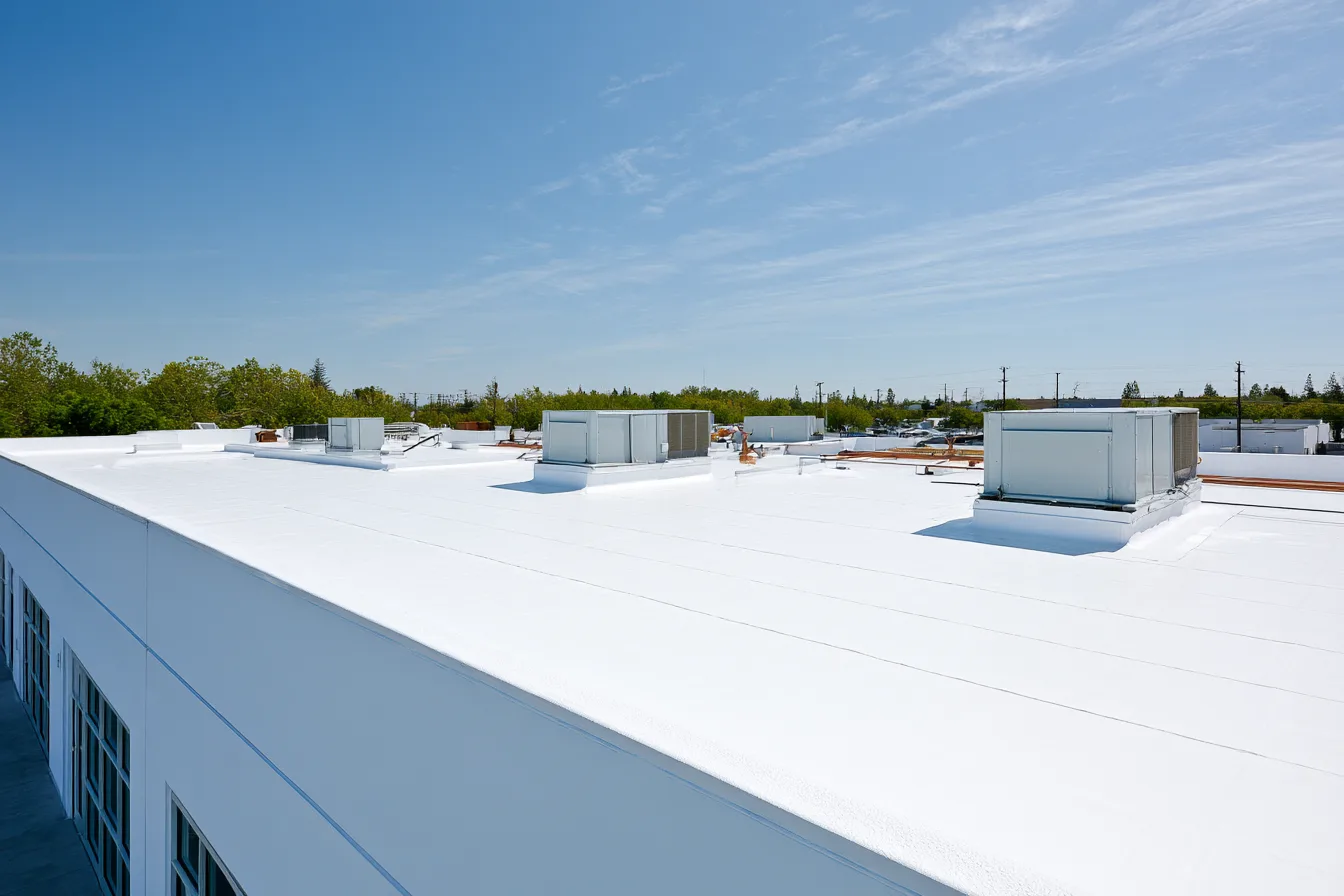
The open white field of a TPO roof can look straightforward. Much of the work is in the places where that field stops: a parapet, an equipment curb, a pipe or the edge of a drain. Those connections are part of the system from the beginning.
TPO sheets join with heat-welded seams. A successful assembly also needs a suitable deck, specified insulation and attachment, and a way for water to leave the roof. The membrane isn’t a remedy for wet insulation or a damaged base.
Start your Lancaster TPO project with a free inspection through Ten Mile Roofing. The existing roof and the building’s use help establish which assembly and removal approach belong in the proposal.
Existing layers need assessment for moisture, deterioration and suitability. A dry-looking surface doesn’t establish what lies beneath it.
Slope, low areas and outlet locations affect the design. Tapered insulation can be part of the drainage plan where the specified assembly calls for it.
Attachment follows the deck, assembly and applicable requirements. Membrane, insulation and supporting boards need to be specified together.
Curbs, walls, penetrations and perimeters need compatible flashing and terminations. Their number and arrangement can change the work substantially.
This cutaway shows the relationship between the deck, supporting layers and the welded membrane. The actual product specification determines which layers and attachment details belong on the building.
The deck carries the roof assembly. Its condition and construction affect preparation and attachment.
The insulation layout contributes to the thermal assembly and can help form drainage slopes when tapered material is specified.
A suitable cover board provides a supporting layer above insulation in assemblies that call for one. It isn’t a substitute for repairing unsuitable material below.
The sheets and their welded connections form the covering. Compatible flashing connects that field to roof edges, equipment and penetrations.
Option 1
A recover needs an existing roof that qualifies under the product system and applicable requirements. Moisture, attachment and underlying condition need an answer before additional layers are placed.
Option 2
Removal allows unsuitable layers to be addressed and the new assembly to start from a prepared base. The scope also needs a way to handle damage discovered during tear-off.
Resolve the assembly, perimeter and equipment connections before ordering the system. A membrane name and thickness alone don’t describe the job.
Material loading, removal and the work area need to fit the property. Include equipment access and occupied spaces in the sequence.
Rooftop equipment will still need attention after roofing is complete. Walkway protection and future access belong in the design where the system and building require them.
Sometimes, when the existing roof and proposed assembly qualify. The decision depends on condition, moisture, roof layers, attachment and applicable requirements. Covering an unsuitable assembly leaves the problem underneath.
No. Thickness is one specification. Seams, attachment, flashing and a suitable base still need to work together.
Reflectivity affects one part of the building’s performance. Insulation, mechanical systems and how the property is used also matter, so the membrane alone doesn’t establish a savings amount.
A compatible repair can be considered when the surrounding membrane and underlying layers are suitable.
Our flat roof repair page explains how the existing material shapes the repair.
Talk through the complete TPO assembly for your Lancaster building. Request a free inspection and bring the roof condition, access and system choices into one plan.
Call (972) 218-8600