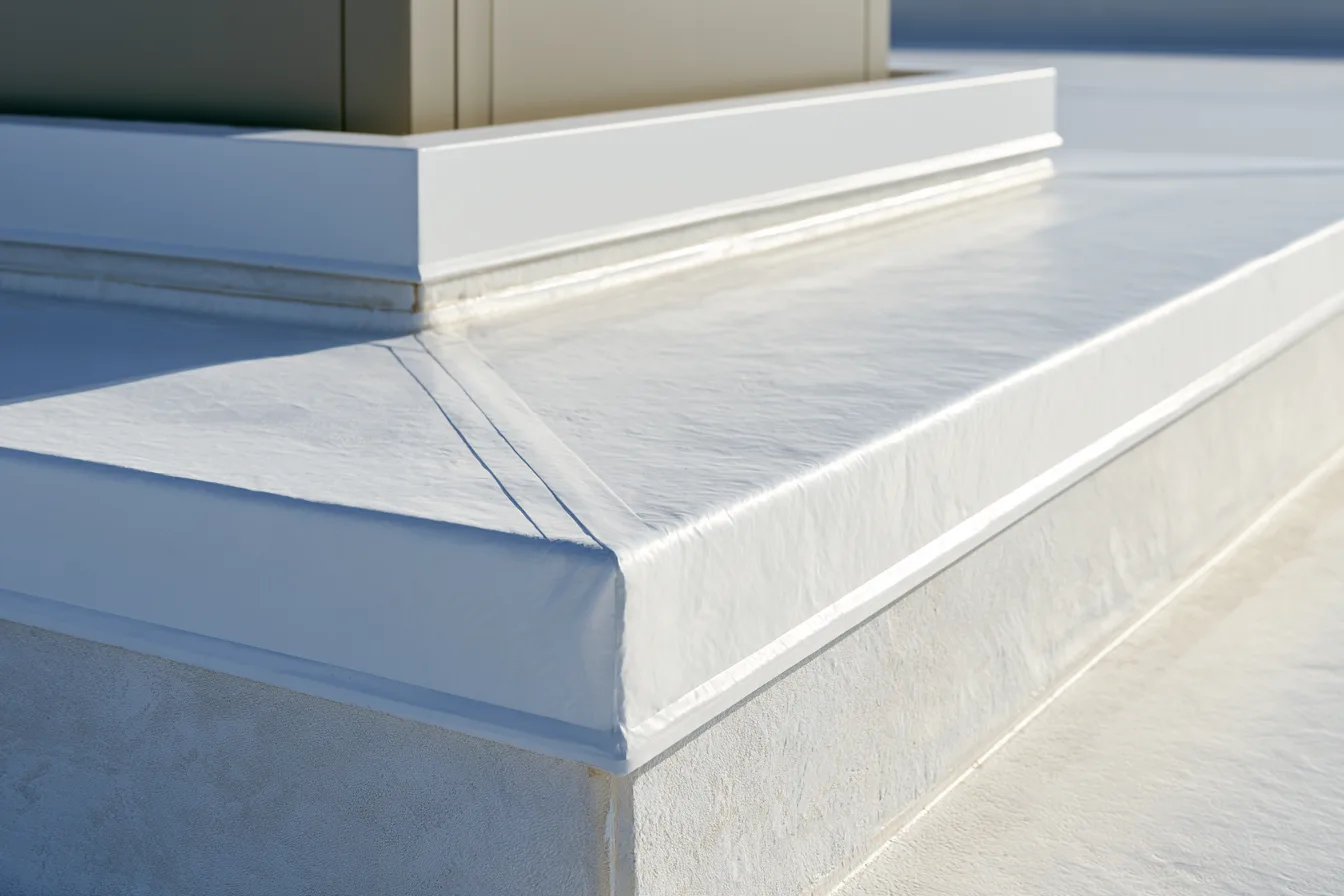
Seams and local membrane damage
A loose seam or damaged membrane area needs compatible preparation and repair. The condition around the opening determines how the new work can connect.
A roof leak above a business can interrupt the room before anyone has seen a defect outside. Water can move through insulation or along the deck, so the indoor drip and the roof opening may be separated by a considerable distance.
The repair has to suit the roof material as well as the location. A welded thermoplastic seam, an adhered membrane patch and a built-up roof repair involve different methods. General roof cement is not a universal repair material.
Ten Mile Roofing helps Lancaster owners begin with a free inspection. Tell us which space is affected and any repair history you already know; the roofer investigates the roof connection behind it.
A loose seam or damaged membrane area needs compatible preparation and repair. The condition around the opening determines how the new work can connect.
The membrane turns up around a curb and terminates against its detail. Corners, laps and the top termination need to work together to keep water on the roof surface.
Drainage outlets and perimeter details receive water from the field. A leak at one of these points can involve both the flashing and the way water reaches or leaves it.
Saturated or deteriorated material can extend beyond the visible defect. A surface patch over unsuitable layers leaves the underlying condition unresolved.
A useful repair begins at the cause and connects back into the roof. The surrounding membrane has to accept the specified patch or flashing, and the layers below need to be suitable.
The existing roof system determines compatible repair products and methods.
Unsuitable material and contamination can prevent the repair from bonding or joining correctly.
The new work must shed water back onto the drainage surface and join the roof around it.
If the inspection raises a moisture question, further investigation can affect the size of the repair. The proposal should distinguish the observed defect from conditions that remain concealed.
For a new membrane system, the TPO roofing guide explains the layers and attachment decisions.
Option 1
A defined opening with sound material around and below it can support focused work. The repair should explain which detail is being renewed.
Option 2
Multiple recurring leaks, extensive deterioration or widespread wet layers can change the decision. A new patch cannot compensate for an unsuitable assembly across the roof.
The room, approximate location and what the leak is affecting help coordinate access and immediate precautions. Stay clear of electrical or unstable ceiling hazards.
A small roof repair can still require material handling and access near equipment. The plan should account for staff, visitors and the area beneath the work.
The location and type of repair help explain the roof if a later concern appears. A returning leak should be considered with the earlier work in view, rather than as an unrelated stain.
Low-slope roofs are commonly called flat roofs. They still need a way to direct water toward outlets, and the actual slope and drainage arrangement affect the system.
A patch can address an opening, but it doesn’t necessarily correct a low area, blocked outlet or unsuitable drainage layout. Those conditions need their own assessment.
Another opening, a damaged connection beyond the patch or unsuitable underlying material can contribute. The earlier repair history helps the assessment establish what the next scope needs to address.
No. Products and methods must be compatible with the existing roof. An unsuitable patch can undermine the repair or complicate later work.
Get the business leak connected to the roof problem behind it. Share the Lancaster address and affected space, and request a free inspection.
Call (972) 218-8600