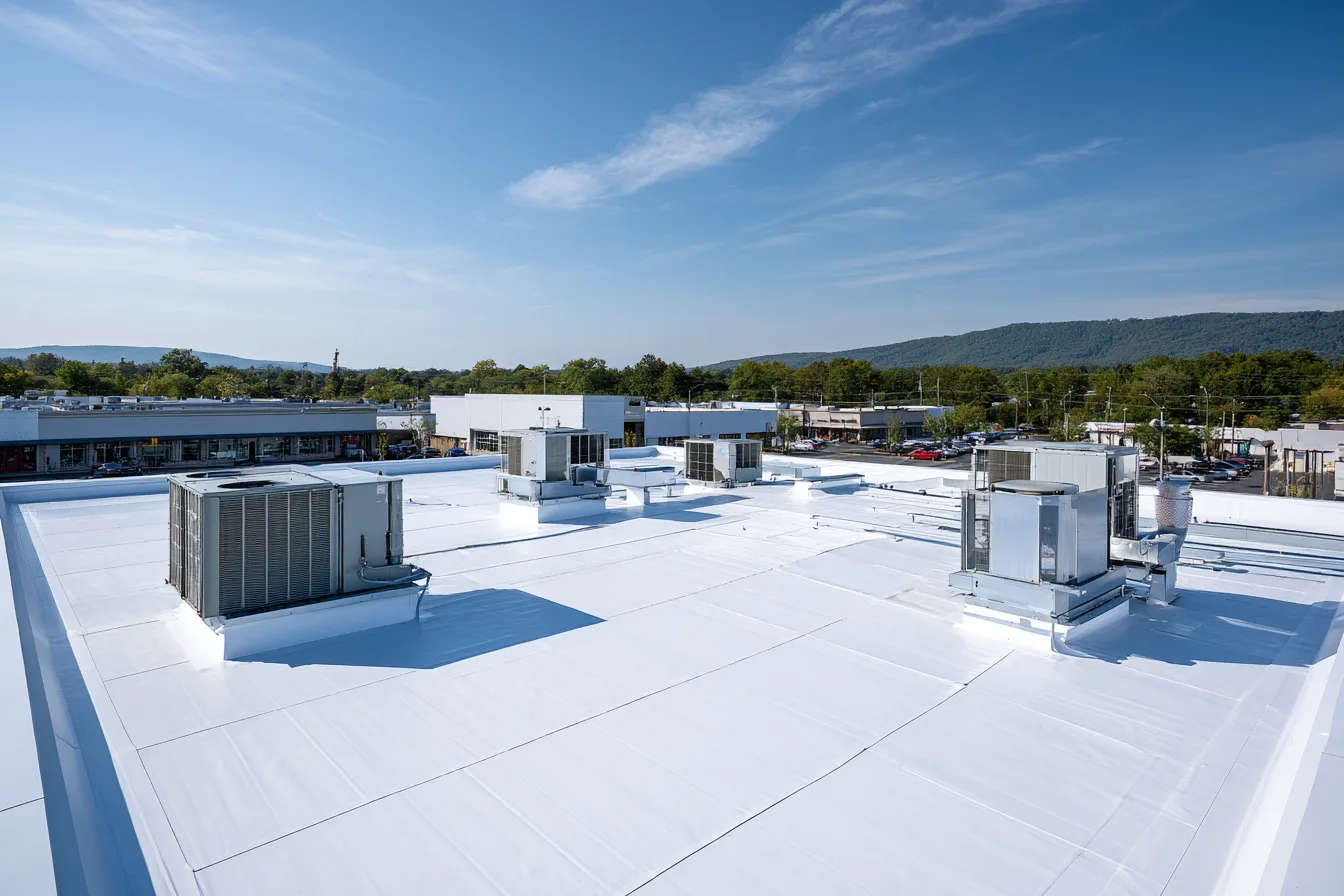
Drainage and low areas
The roof must direct water toward usable outlets. Drain placement, slope and blocked routes can affect the work independently of a visible opening in the covering.
A commercial roof is also part of a working property. A service door, an occupied office and rooftop equipment can each affect where people and materials need to move during a roofing project. Those practical constraints belong beside the roof specification.
The system already on the building establishes the technical starting point. Membrane condition, drainage, insulation, deck and flashing determine whether a focused repair, restoration or replacement is appropriate. A fresh surface cannot make wet or unsound material beneath it suitable.
Ten Mile Roofing accepts commercial roofing requests in Lancaster. Arrange a free inspection and explain the roof concern, the building’s use and any access restrictions you already know about.
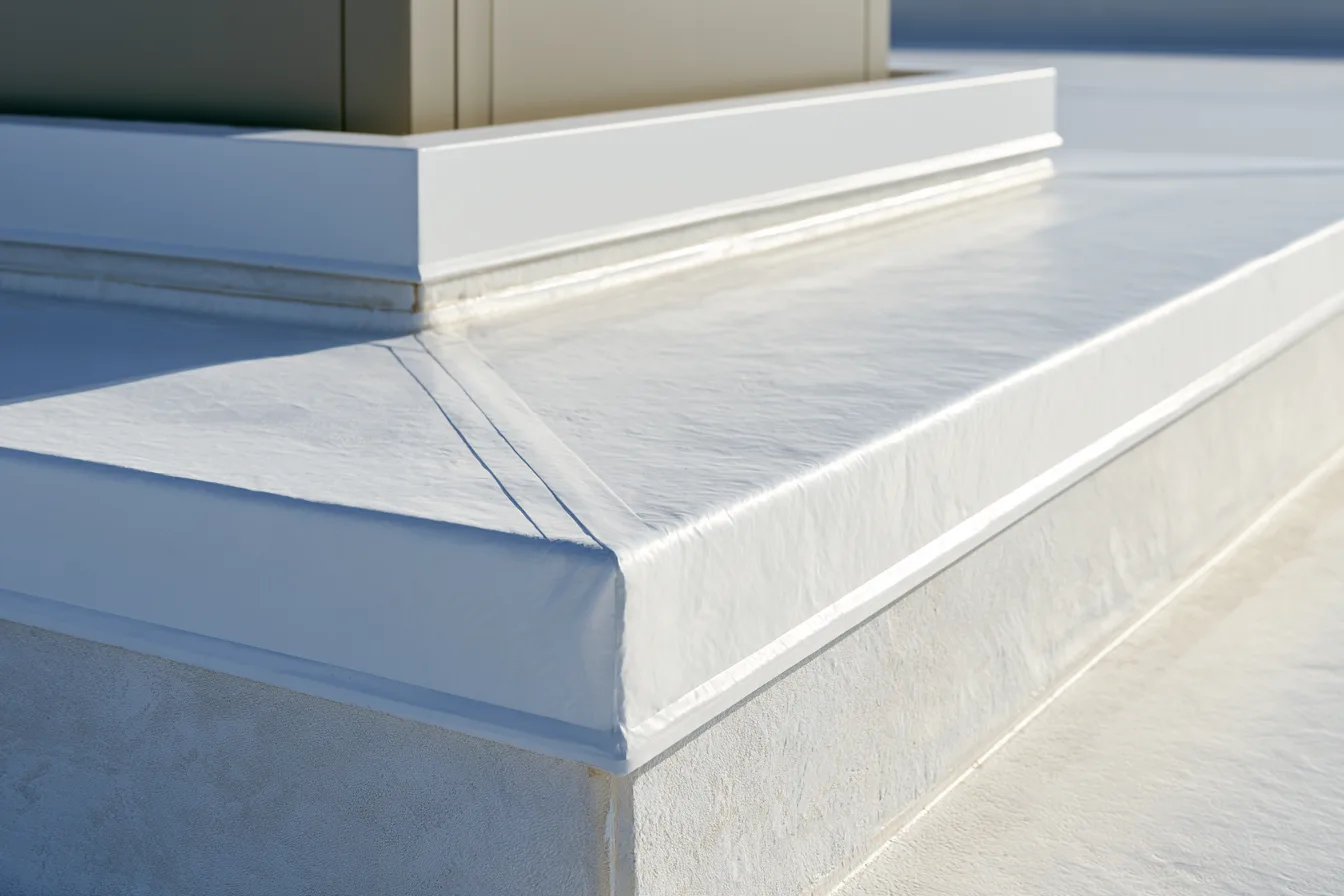
Assess the leaking seam, curb, penetration or other low-slope detail.
Explore flat roof repair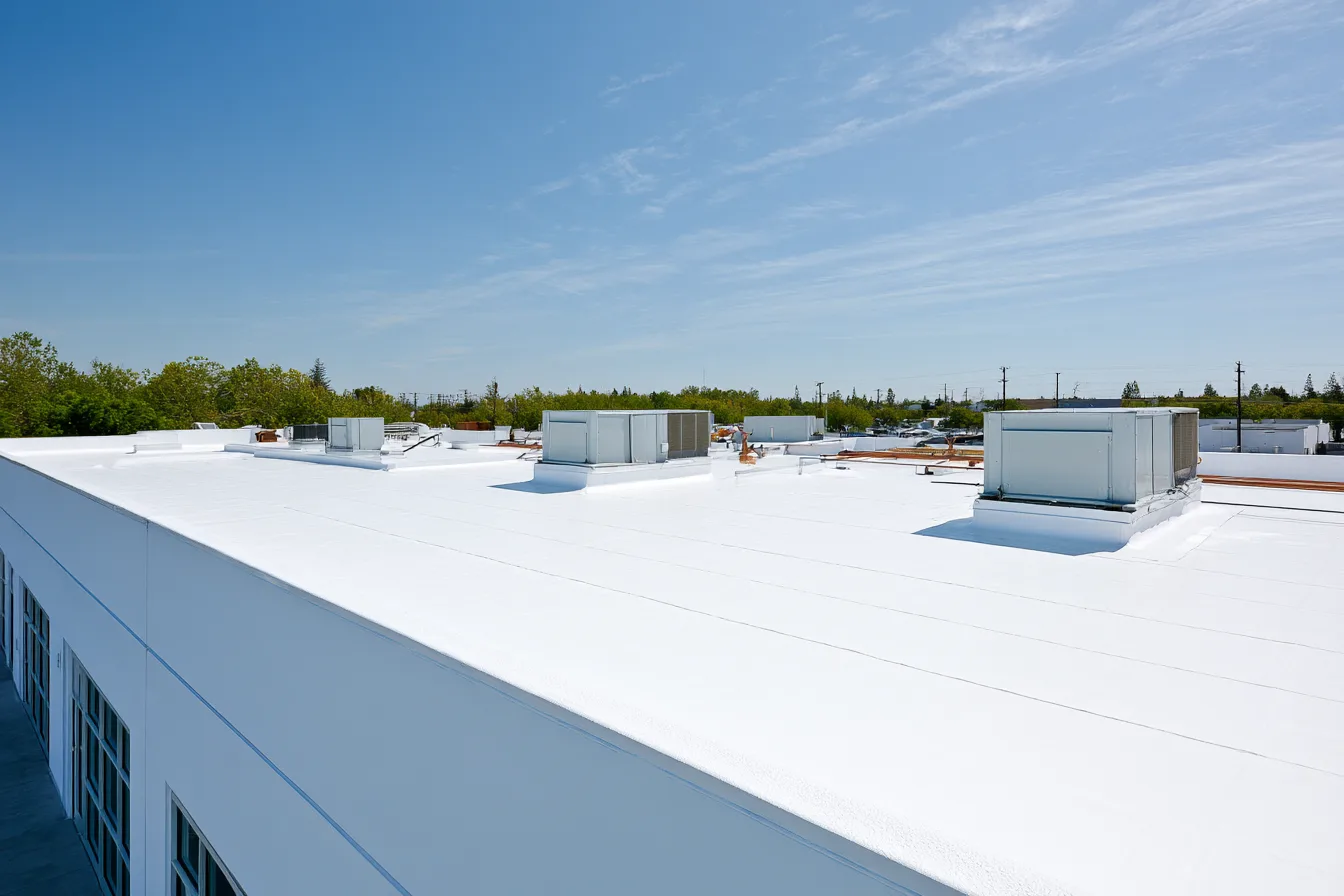
Plan the base, attachment, insulation and welded membrane together.
Explore tpo roofing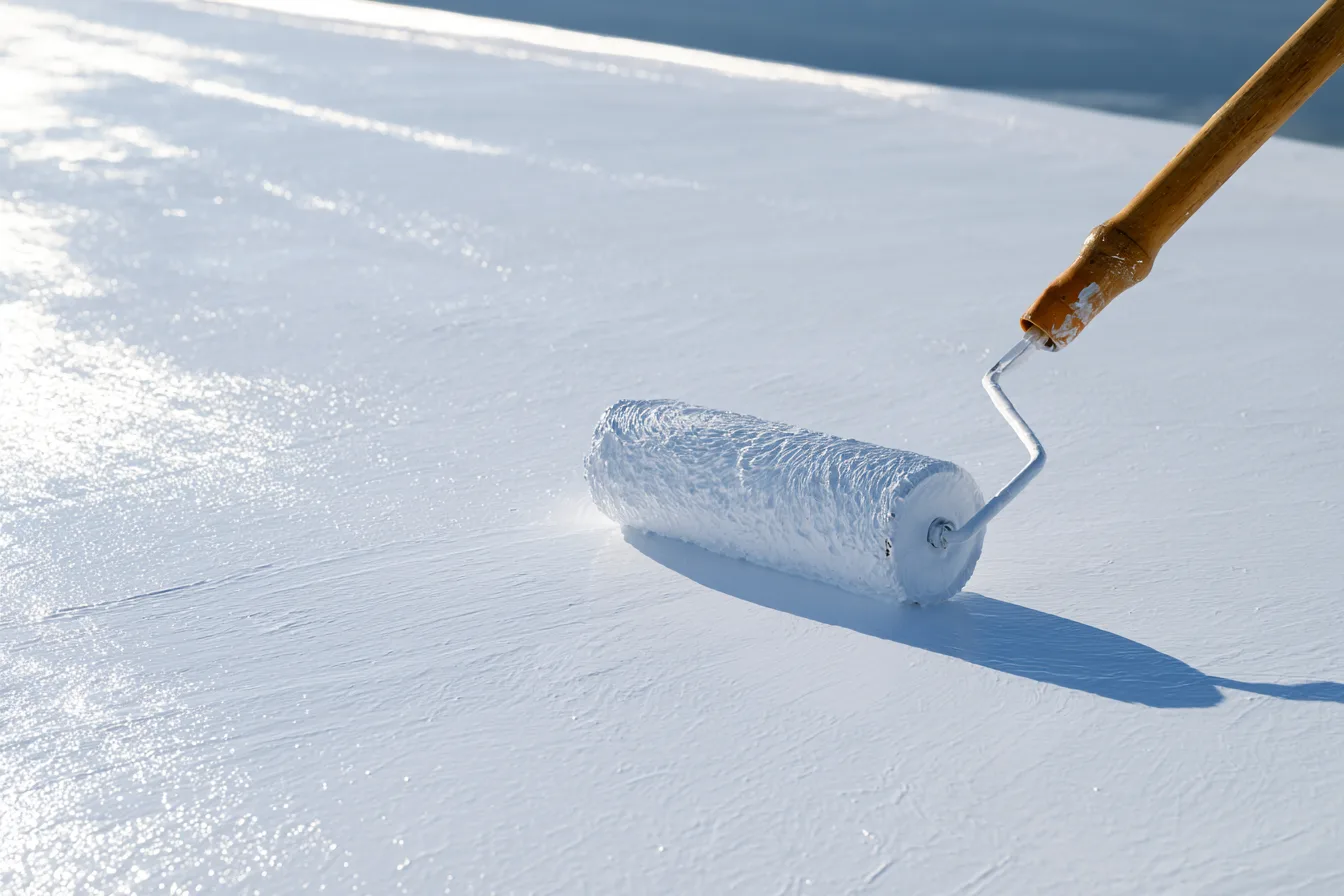
Determine whether the existing assembly qualifies for restoration.
Explore commercial roof coatingsThe roof must direct water toward usable outlets. Drain placement, slope and blocked routes can affect the work independently of a visible opening in the covering.
Seams, curbs, penetrations and roof edges interrupt the open field. The inspection considers those connections along with the material around them.
Wet insulation, an unsuitable deck or damaged supporting layers can change the project. Further investigation may be needed where visible conditions do not answer what can remain.
Access, delivery areas, occupied spaces and equipment service can affect the work sequence. They are scope questions, not details to resolve only after materials arrive.
A ceiling tile marks where water became visible indoors. Above it, water may have followed the deck, insulation or a roof layer from a seam or equipment curb elsewhere. Patching directly over the tile can miss that entry point.
The assessment connects the indoor location with the roof layout, drainage and existing repairs. A leak near rooftop equipment can involve the roof flashing or the equipment itself, so identifying the source matters before choosing the trade and scope.
If moisture has reached the insulation, a surface repair is only part of the question. The condition and extent of the affected layers determine what needs to be removed or investigated further. Include the room’s use and any sensitive stock or equipment in the request.
Option 1
A defined defect with suitable surrounding material can support a localized repair. Compatibility and the affected layers matter.
Option 2
A qualified existing roof can be considered for a coating system with its required preparation and repairs. Moisture, adhesion and drainage must be addressed.
Option 3
An unsuitable or broadly deteriorated assembly can require removal and a new system. The proposal needs to explain the base, insulation, attachment and final covering.
Tell Ten Mile how the building needs to keep working.
Share the roof concern and the use of the space below. Existing drawings or repair records can help when readily available, but they are not required to request an inspection.
The assessment identifies the visible condition and questions requiring further investigation. Proposed repairs or replacement need a physical reason and a suitable assembly.
Access, material handling, weather and equipment interfaces need a sequence. The project should account for the building’s operations without promising that every activity can continue unchanged.
Yes, when the defect is localized and the surrounding roof can accept the repair. Recurring problems across the roof or unsuitable underlying layers can make a broader project appropriate.
No. A coating cannot make wet insulation dry or sound. Moisture and unsuitable layers need to be addressed before a restoration system is considered.
Yes. The free inspection and roof walk are available where access and conditions permit. Include the building location and the concern when requesting help.
Discuss which activities need to continue and which areas the roofing work will affect. Access and the proposed scope determine the sequence; some work may require a temporary change to normal operations.
Put the roof and the building’s needs into the same conversation. Request a free commercial roof inspection through Ten Mile Roofing.
Call (972) 218-8600